

- cross-posted to:
- privacy@lemmy.ml
- cross-posted to:
- privacy@lemmy.ml
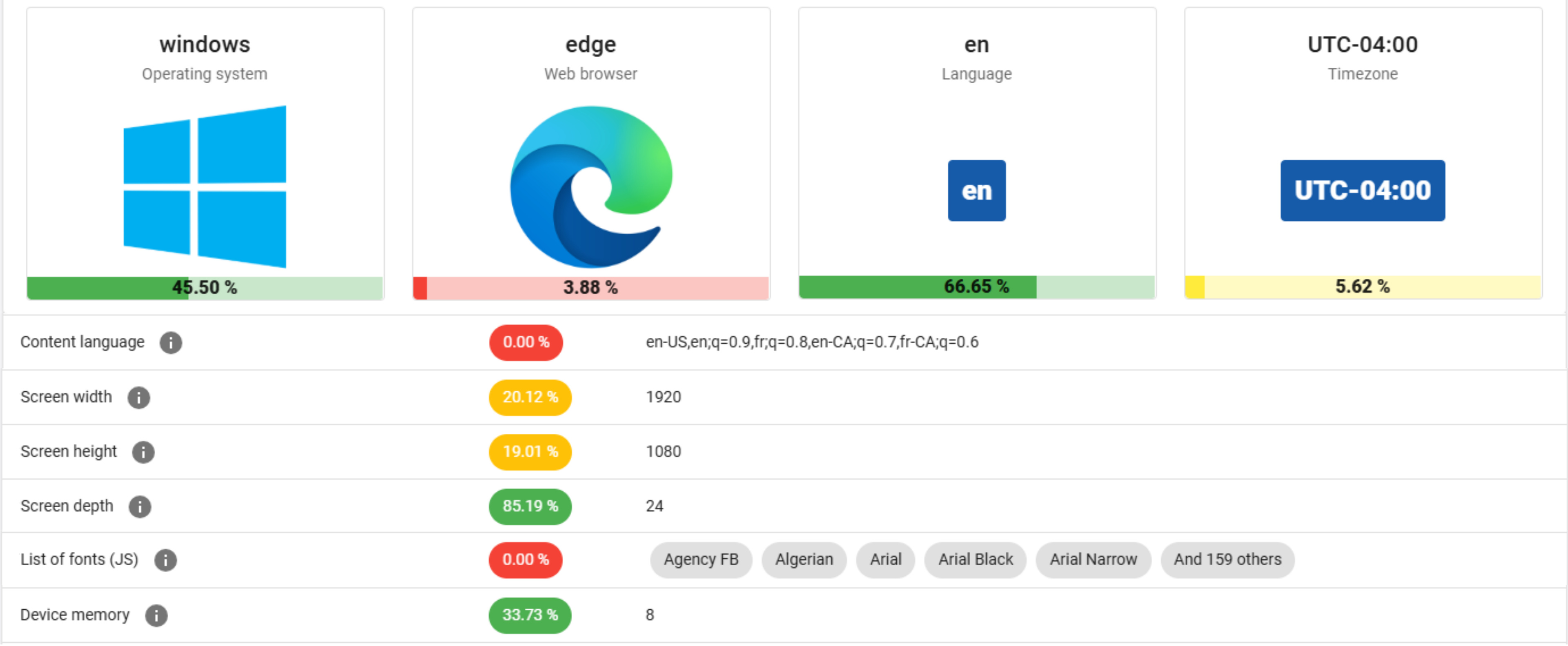
Amidst the glossy marketing for VPN services, it can be tempting to believe that the moment you flick on the VPN connection you can browse the internet with full privacy. Unfortunately this is quite far from the truth, as interacting with internet services like websites leaves a significant fingerprint. In a study by [RTINGS.com] this browser fingerprinting was investigated in detail, showing just how easy it is to uniquely identify a visitor across the 83 laptops used in the study.
As summarized in the related video (also embedded below), the start of the study involved the Am I Unique? website which provides you with an overview of your browser fingerprint. With over 4.5 million fingerprints in their database as of writing, even using Edge on Windows 10 marks you as unique, which is telling.
It’s always kind of funny when the Technology folks wade into well-researched and well-worn Privacy territory.
Do you want to not wave a giant flag of your activity to Google, Meta, MS, and your ISP when you do literally anything online? Either use a VPN and Mullvad (or Librewolf, but YMMV) browser, OR a VPN and Tor OR Tor with an https bridge if paying for a VPN will make you a target (Tor bridges are not for casuals, save them for those in genuine need).
VPN locations need to be changed. Frequently. Router level VPN at home becomes your “This is me” location, then make use of VPNs on each device when you want an extra layer of obfuscation.
There’s not a lot of middle ground at this point, and it’s not difficult.
Does that mean my ISP can still detect if I’m going to websites they don’t approve of if I’m using Mullvad as my VPN but using Firefox as my browser?
Your ISP can’t tell who you are contacting if you are using a VPN, but websites will track you by other means.
No, with a VPN the only thing your ISP sees is you connecting to a VPN server IP.
But browser finger printing, on the other hand, can identify you to every website you visit, due to info your browser hands over to every website… Such as OS version, Resolution, installed Plugins, browser settings, geolocation info, etc…which is often unique enough to identify you out of the whole of the internet.
Ironically, locking your browser down with more security features/settings/plugins often makes you more identifiable. Cause capitalism is god damned sure they are gonna track you and monetize the hell out of your information, whether its via your name, your user name, or just your digital fingerprint.
https://coveryourtracks.eff.org/