

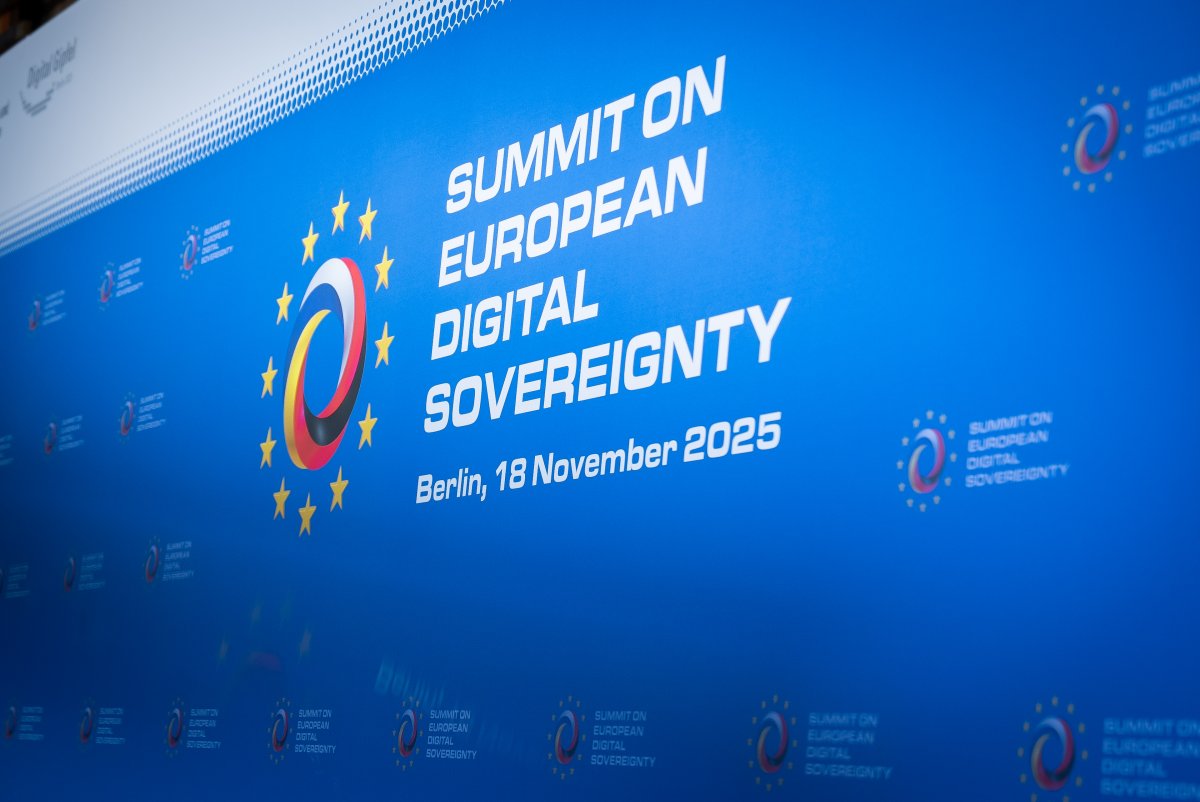
After all, open-source applications can immediately and noticeably reduce dependencies on tech giants. Among others, Schleswig-Holstein or the International Criminal Court are currently demonstrating this. But in reality, open-source providers were treated shabbily by politicians at the summit, even scolded in places.
This is most clearly seen in the “Charter for Digital Sovereignty and Resilience,” initiated by Austria, which was signed by all EU states at the summit. The text states: “Open-source solutions can play an important role in strengthening digital sovereignty, provided they meet high cybersecurity standards and, where appropriate, are complemented by reliable proprietary technologies.” Open source is thus branded as technology that is typically insecure and unreliable. A slap in the face.
Overall, the impression from the summit was: In terms of digital sovereignty, politics primarily relies on “Buy European” clauses, AI and cloud projects, and on heavyweights like SAP, Schwartz Digits, or Telekom.